


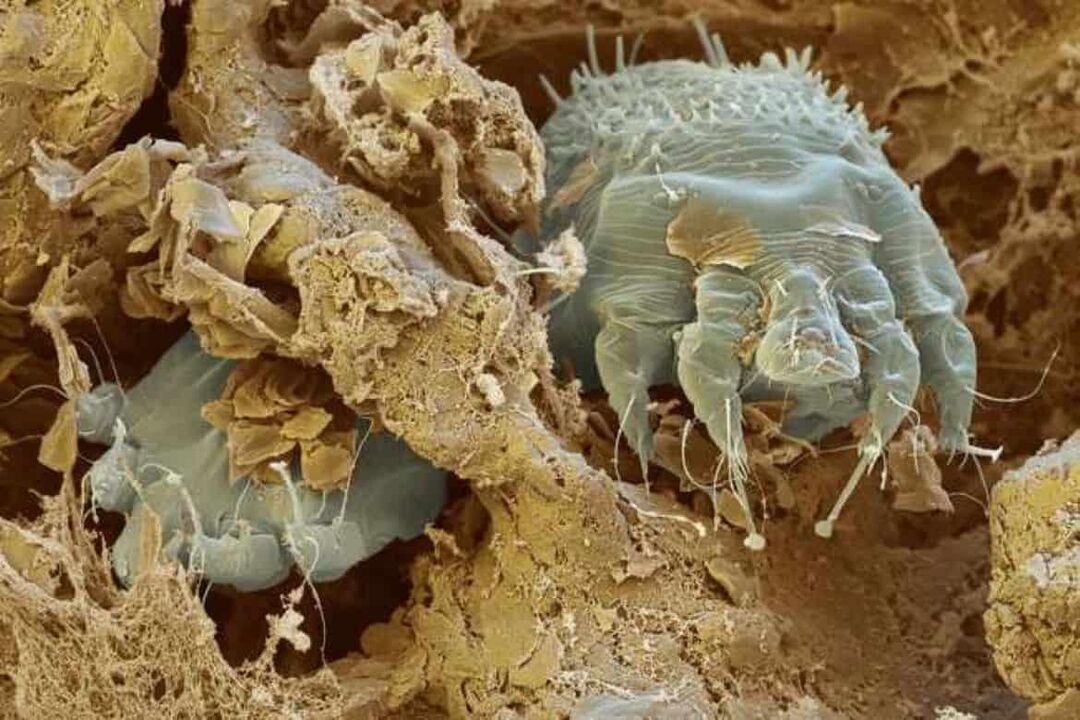
Subcutaneous parasites are represented by various types of living organisms.These are bacteria, protozoa, worms, insects.Many people can live peacefully for a long time without knowing about the presence of parasites in their body.In the meantime they will reproduce, increasing their population.The activities of foreign agents can have serious consequences.Subcutaneous parasites in humans cause various symptoms, inflammatory processes of the skin, intoxication, which, in turn, cause disorders in all systems of the body.Some representatives of skin parasites are disease carriers.
Types of subcutaneous parasites and methods of infection
If you want to find out who crawls under the skin, the following subcutaneous worms are found in people:
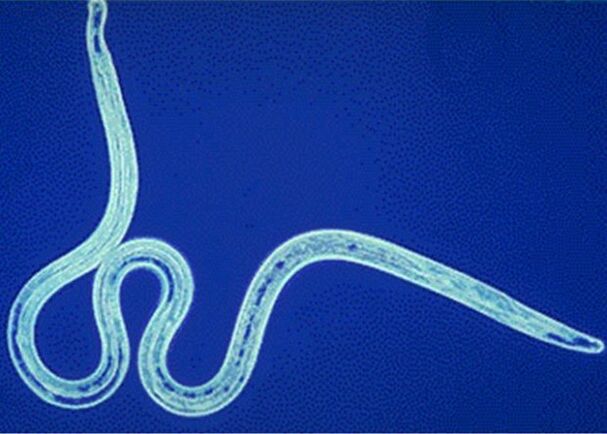
- Dirofilariasis.This disease is caused by the larval stage of the nematode.Infection occurs through the bite of a mosquito (lice, fleas or ticks) which transmits the disease.A sexually mature individual reaches a length of 30 cm, and the larva of this parasite is microscopic.After infection, it develops under the human skin for 3 months.Domestic dogs and cats can also carry the infection.
- If we list what parasites live under the skin, we cannot fail to mention themfilaria.The infection is caused by certain types of roundworms.In this case various diseases arise: onchocerciasis, dipetalonematosis, loiasis and mansonellosis.Worm carriers and their intermediate hosts are insects (mosquitoes, midges, horseflies, etc.).It is they who infect humans with heartworm larvae, causing worms to appear in the skin.
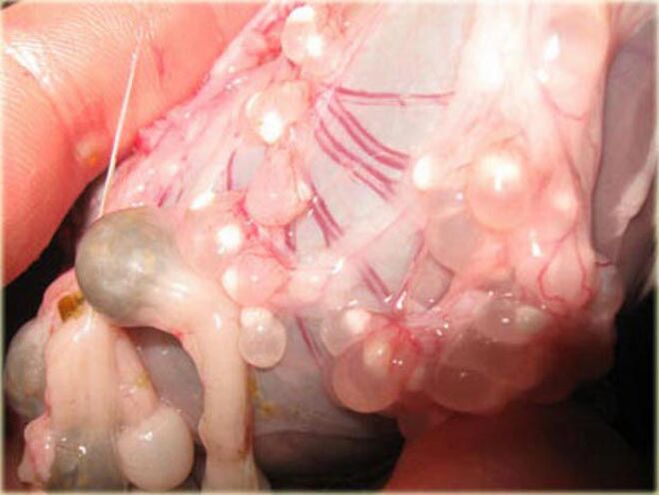
- Another skin parasite in humans iscysticercus larvae.They cause cysticercosis.Invasion occurs through the intestine, where the worms enter with dirty hands, water or food.A cysticercus is an oval vesicle that contains the scolex of the parasite.Subcutaneous worms can range from round to spindle-shaped.Humans serve as an intermediate host.
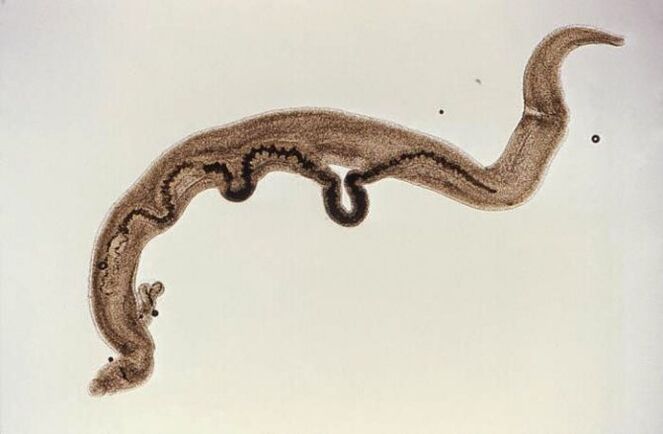
- Schistosomiasisis a disease caused in humans by worms of the trematode order.These are worms up to 2 cm long.The larvae of this parasite, which can swim in water, are cercariae.They can penetrate the human body directly through the skin.This infection can live in any organ, even under the skin.
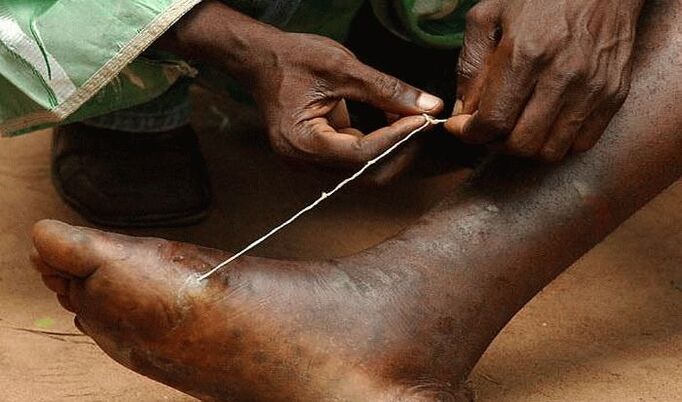
- Rishta– these are other worms under the skin.These white worms cause dracunculiasis and are classified as large roundworms.Their intermediate hosts are copepods that live in water.First, the parasite enters the human stomach, and then from the retroperitoneal space penetrates the skin.Males reach a length of 10 cm, and females - 120 cm.

Damage to livestock
The horsefly's reproductive cycle begins around June and ends in September.At this time, fertilized females are especially active in search of a potential victim.
As a parasite in the body of livestock, subcutaneous horsefly often becomes the cause of the development of a very dangerous disease - hypodermatosis.This disease occurs after a long stay of the parasite in the body of its carrier, about 7 months.During this period, the larvae of the subcutaneous horsefly manage to seriously injure the organs and tissues, as well as the skin of the animal.
Note!Horsefly larvae secrete a special toxic substance: hypodermotoxin.Together with the meat and milk of an infected animal, it can enter the human body, causing a negative impact on health!
Fistulae indicating the presence of hypodermatosis can be found on the body of animals from the last month of winter until mid-summer.At the same time, larvae can exist in their capsules for quite a long time - about 1-3 months.After emerging, they fall to the ground, usually in manure, where they develop into pupae.
Note!Furthermore, insects that have pupated also pose a danger: just 10 larvae, which are in the third stage of their development, can infect around 40% of livestock!
Symptoms of heartworm disease
The larvae of this parasite can spread through the bloodstream throughout the body and lodge in the eyes, pulmonary artery, heart, serous cavities, perinephric adipose tissue and under the skin.
If an infestation occurs with a species of worm called Dirofilaria repens, the conjunctiva or subcutaneous fatty tissue is affected.
The signs and symptoms of this disease are as follows:
- painful lumps appear at the site of the insect bite;
- within a couple of days, a third of patients experience a displacement of the seal by 20-30 cm from the site of the bite;
- a person may feel swelling, burning and itching at the site of the bite;
- there is a sensation of crawling and moving under the skin;
- periods of remission are replaced by episodes of exacerbation;
- the subcutaneous worm causes the appearance of abscesses and boils (a worm lives inside them in the connective capsule);
- Sometimes abscesses open on their own and white parasites crawl out of the skin.
Filariasis
This term refers to a type of nematode widespread in tropical countries.The parasites are spread by blood-sucking insects.The diagnosis of filariasis is quite difficult.This is due to the long incubation period.
In some cases, the pathology develops over 7 years.During this period, parasites actively multiply and produce toxic elements that accumulate in the layers of the skin and organs.
When heartworm occurs in a person, the following manifestations may be present:
- The symptoms of urticaria are the formation of small red rashes, accompanied by an itching sensation,
- Short-term fever that occurs from time to time
- Eczema-type skin rashes
- Movable subcutaneous seals,
- Symptoms of intoxication - increased tiredness, drowsiness,
- Vision loss, development of glaucoma.
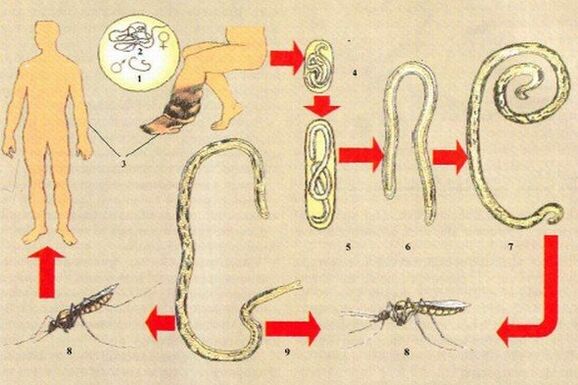
Symptoms of filariasis
Drits Irina Alexandrovna.Parasitologist
Helminth infections can lead to numerous health problems, shortening life by 15-25 years.Many parasites are extremely difficult to detect.They can be found anywhere: in the blood, in the intestines, in the lungs, in the heart, in the brain.Symptoms of helminth infestation can be confused with ARVI, gastrointestinal diseases and others.The main mistake in these cases is the delay!If you suspect the presence of parasites, you need to contact a specialist.More information about modern methods of treating helminthiasis is described in thisinterview with a doctor.If we talk about medications and self-treatment, then this is suitable for the most common helminths (roundworms, pinworms, tapeworms).antiparasitic complex.
After invasion, heartworm can develop over several years.Depending on the form of this disease, various symptoms and signs may develop.
Common to these parasitic diseases will be the appearance of ulcers and skin rashes, damage to the eyes and lymph nodes, a feverish state and the development of elephantiasis in the scrotum and limbs, since these are muscle parasites.
Onchocerciasis
With onchocerciasis, parasites in human muscles are manifested by the following symptoms:
- itchy skin;
- feverish condition;
- weakness;
- dryness and flaking of the skin;
- skin hyperpigmentation (genitals, legs, axillary and inguinal folds);
- papular rash;
- erysipelas;
- papules may form long-term non-healing ulcers;
- under the skin, worms cause atrophy of hair follicles, sweat glands and epidermis;
- painful fibrous knots form under the skin;
- When the eyes are damaged, glaucoma, iridocyclitis, conjunctivitis, corneal cyst, keratitis and other eye diseases develop.
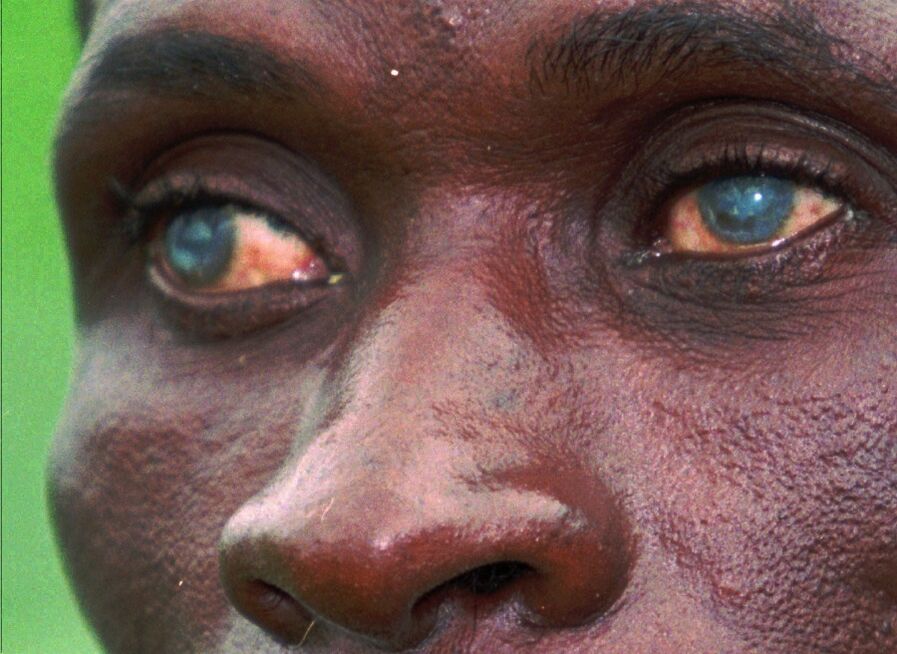
Demodicosis
This term refers to the infestation by mites, which belong to the Demodex genus.These parasites are located in the structure of the sebaceous and meibomian glands.
Such parasites in human skin are accompanied by the following manifestations:
- acne,
- loss of eyelashes,
- disruption of the structure of the dermis in the eye area.
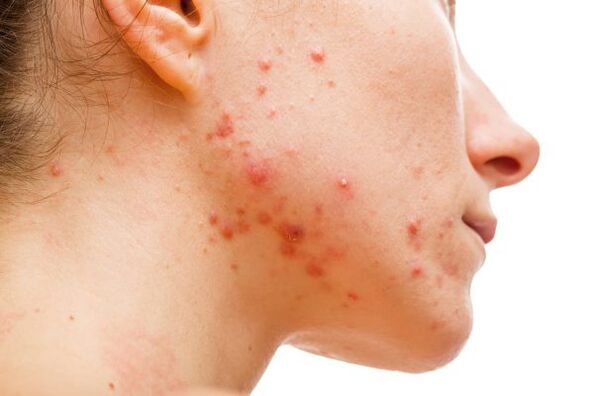
Diagnosis of the pathology is not particularly difficult.This can be done in a few minutes at an appointment with a dermatologist.
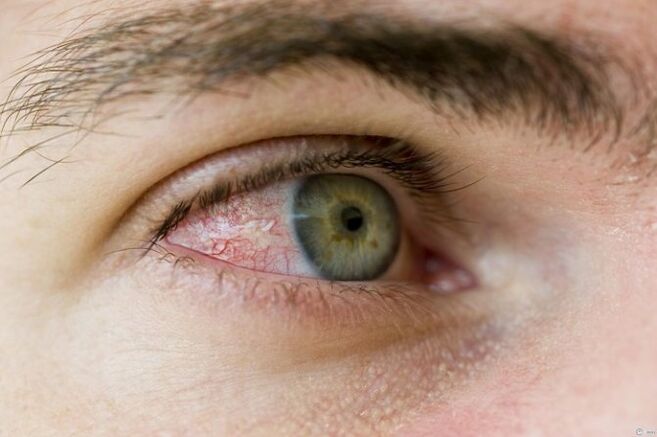
Symptoms of cysticercosis
These human skin parasites can easily enter the gastrointestinal tract with food, where the germinal membrane dissolves and the larva emerges.They enter the bloodstream and spread throughout the body.
After settling in some organs, the larvae transform into cysticerci and cause the appearance of the following symptoms:
- multiple or single painless oval tumor-like formations appear under the skin (usually located on the inside of the shoulders, upper chest and palms);
- you can feel the cavity in the seals;
- Over time these seals grow;
- new formations appear;
- when carrying out histology of the formation, a cysticercus can be detected inside;
- urticaria;
- Rarely do the lymph nodes fester, but more often they do not change for many years and occasionally resolve on their own.
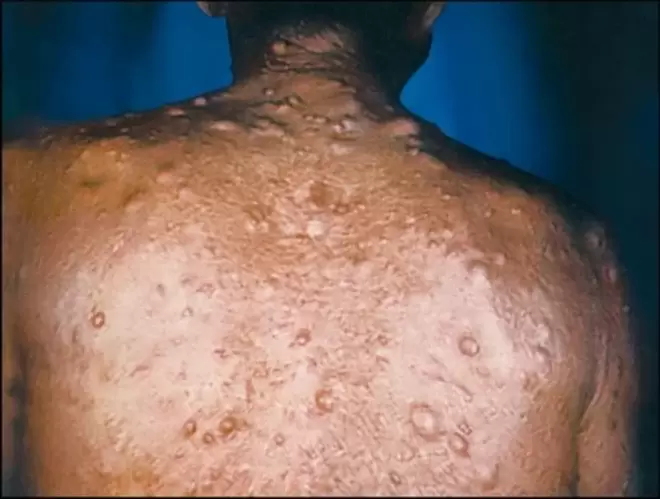
The essence of the problem
Human skin is an attractive area for various microscopic parasitic organisms.The face is no exception.On it there are numerous areas that represent a good refuge for the concentration of microorganisms: nasal cavity, eyes, wrinkles, hair elements in the form of eyebrows, eyelashes, beard, mustache.The influence of parasites on the state of the skin of the face can be direct, when they develop directly in this area, or indirect.In the latter case, organisms such as worms, Giardia or other helminths settle in the gastrointestinal tract, but symptoms of their activity appear on the face: pimples, acne, etc.
The most common facial parasites are Demodex mites.Settling under the skin of a person's face, these creatures cause a disease called demodicosis, which is expressed by obvious and unsightly signs.Rather dangerous parasites are the small Trichinella worms, which migrate from the intestine and settle in the facial muscles, giving rise to the disease trichinosis.Lice can multiply in areas of the face with hairy elements, causing lice disease.
Symptoms of schistosomiasis
Schistosome larvae can penetrate human skin directly from the aquatic environment.Within a few hours they can be in the bloodstream.
When a skin infection occurs, the following symptoms appear:
- urticaria;
- severe itching;
- Irregular skin rashes appear every other day.
Then a calm phase begins for several weeks.In the circulatory system, schistosomes reach the stage of sexually mature individuals and migrate into the vasculature of the genitourinary system.
After a couple of months, the patient develops the following symptoms:
- dry cough;
- feverish condition;
- urticaria;
- heavy night sweats;
- enlarged liver;
- vaginal bleeding;
- blood in urine;
- prostate, kidney and bladder diseases;
- knots on the genitals;
- infertility.
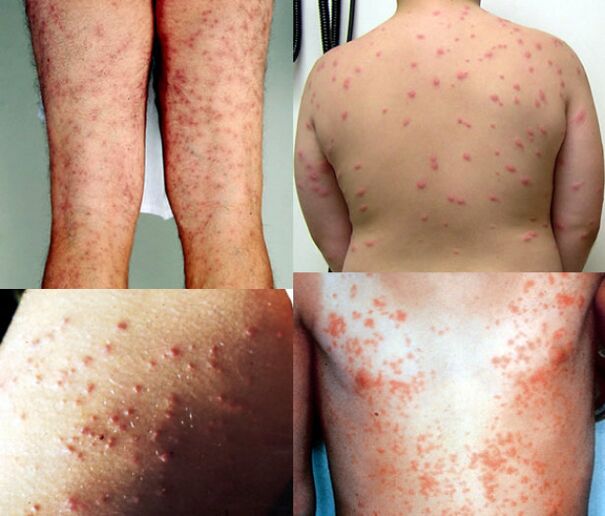
Important!In childhood, schistosomiasis contributes to reduced learning ability, anemia, developmental delays, and memory impairment.
Routes of entry into the host organism
The subcutaneous horsefly is known for the fact that its larvae penetrate the skin of their host and migrate for some time into the tissues, causing parasitic diseases.But how do they enter their owner's body?This is ensured by the female horsefly, which lays its eggs on the skin of the animals;most of the time it attaches them one by one to the fur, and after a while the larvae emerge from them and penetrate under the covers.
Being in the first stage of their development, the larvae are constantly in the body of their host.As the second phase approaches, just before moulting, they appear in the dorsal area.During this period, nodules with fistulas, i.e. exit openings, will be visible on this part of the animal's body.Thanks to them, the horsefly larvae located under the skin are able to breathe and after a while they come out through these same holes.
Symptoms of dracunculiasis
If a person drinks water that contains infected copepods, after death, helminth larvae are released into the patient's digestive system.
They penetrate the retroperitoneal space and migrate through the lymphatic system to the soft tissues.Only after 3 months can the female of this parasite penetrate the skin or connective tissue for further development.
As the female grows, the symptoms characteristic of the patient's disease increase:
- an allergic reaction to the infection appears only after 10-14 months in the form of hives, fainting, nausea, diarrhea, vomiting and suffocation;
- after a year a restous blister appears on the skin (its diameter reaches 2-7 cm, but there are no signs of inflammation);
- a helminth is seen in the bladder;
- after a few days the bubble itself opens and the necrotic masses are rejected;
- upon opening the patient feels a burning sensation and sharp pain.
Consequences
Infection with the subcutaneous fly leads to the following consequences:
- Cows have a decrease in milk production of about 7%.
- Young animals have growth retardation.
- For the leather industry: the skin of animals that have suffered from hypodermatosis has holes that ruin the raw hides.
- For the meat industry, it is necessary to remove the capsules in which the larvae have developed, due to which a fairly large amount of meat is lost;sometimes, in case of severe contamination, it is necessary to eliminate about 10% of the raw materials.
Diagnosis of subcutaneous parasites
In most cases, the diagnosis of the affected skin is carried out directly in the office of a specialist who, through a visual examination, can already determine the disease.But to accurately identify the cause and concomitant damage to the internal organs, the patient is prescribed a comprehensive medical examination.
Firstly, it is necessary to clarify all lesions, and secondly, in this way you can find areas of accumulation of parasites (if any) and approximately determine their number.
If you notice unpleasant symptoms in yourself in the form of a rash, itching and other changes, you should contact specialists such as:
- dermatologist;
- allergist;
- neurologist;
- medical psychologist;
- infectious disease specialist
A comprehensive examination involves a visit to a neurologist and a medical psychologist, since often itching and rash are a simple psychological disorder.But such visits are only due to the lack of an accurate diagnosis, which was not carried out after a visit to a local doctor.
In identifying the type of disease, laboratory diagnostics of the patient is especially important, which will accurately show the presence of parasites under the skin or in internal organs.
This examination includes two phases:
- Direct diagnosis of parasites: a scraping or smear of the mucous membranes is used to study the changes.The direct method is used in case of obvious manifestation of the presence of parasites: redness of the skin, blisters, purulent acne.
- The second stage involves studying blood for the presence of antigen-antibody complexes, which precisely determine the immune response to fight parasites in the human body.As a rule, discarded elements of the vital activity of parasites almost completely kill protective antibodies, as a result of which the weakened immunity of the body is not able to overcome the invasion and activities of unwanted guests.
To prescribe treatment, it is necessary to accurately identify the type of parasite that has entered the human body.
Here hair, blood, nails, feces, contents of skin blisters and other important biological materials are often analyzed together with a skin scraping or mucosal smear.
It is impossible to talk exactly about the treatment of parasites under the skin.Here their location, area and stage of damage play an important role.
For general information purposes, only the following methods can be indicated:
- Subcutaneous mitessubject to elimination by the use of drugs based on the elimination of all types of parasites in the body.Here specialists often prescribe acaricidal agents, such as Trichopolum, as well as antihistamines.For external use, antibiotic ointments and gels are effective, as well as vasoconstrictor drugs, for example, a special solution.The doctor will explain the instructions for use and the treatment regimen depending on the stage of the injury.
- Dracunculiasissubject to surgery.Including all types of worms that have spread under the skin of a person or have already affected the internal organs.The danger of such lesions lies in the spread of parasites into the internal organs, often affecting the brain.That is why the patient must undergo a thorough and comprehensive examination to determine the location of the worms.
The general principle of removal of parasites from the body occurs in two ways: the conservative method and surgical intervention.
The use of traditional methods in the case of treatment of subcutaneous parasites is not recommended, since it will take a long time, and the damage to the organism may already be serious and have consequences on the patient's future life.
Treatment of trichinosis
With timely treatment, you can easily get rid of parasites.The drugs Vermox, Albendazole, Mebendazole destroy larvae, adults and unborn embryos.Allergy drugs: Tavegil, Suprastin.If myocarditis or pneumonia has developed, your doctor will prescribe corticosteroids.
Attention!The prescription of corticosteroids is possible only in case of complications of the disease, since they lead to an increase in the reproductive activity of females.
If treatment is carried out inadequately, relapses are observed after 1-2 weeks.Females that survive in the intestine are active.
Treatment with folk remedies:
- Chopped tansy flowers (2 tablespoons) pour 0.5 liters of water, cook over low heat for 10 minutes, wait an hour until it cools, strain.Take 3 times a day 30 minutes before meals for a whole month.Destroys adult individuals, normalizes intestinal function and bile secretion.
- Take 1 tsp.milk thistle oil 3 times a day with meals, duration 30 days.Restores the intestines, removes toxins, helps the liver.
Folk remedies are not able to cope with the larvae;they only eliminate adult individuals living in the intestine and relieve intoxication.Self-treatment is completely excluded.Therapy must be carried out under the supervision of a doctor.
Parasites on the human face are considered quite common.They are safe for health, but significantly spoil the appearance and cause a lot of inconvenience to the owner.To restore the beauty and flawlessness of appearance, it is necessary to resort to immediate treatment.In addition, modern medicine offers a wide variety of drugs, ointments and other cosmetics necessary to eliminate parasites.
Preventive measures
Of course, it is advisable to prevent any disease rather than undertake long-term and not always effective treatment.This problem is especially acute with regard to the prevention of subcutaneous parasites.
No one today is immune from the danger of pathogenic microorganisms entering the body, however there are some rules that will allow you to protect yourself as much as possible.
- It is necessary to wash your hands not only before eating, but also after returning home from the street.It is especially important to do this whenever you come into contact with public objects.
- All personal hygiene products, as well as cosmetics, are purely individual items.Under no circumstances should you allow them to use your lipstick or creams, as they may contain parasite eggs.
- You should not wear other people's things, as their real owner may be infected with parasites.
- It is important to always wash fruit and vegetables before eating them and do not drink tap water.
- Wounds that appear on the skin should be immediately treated with an antiseptic so as not to make the area attractive to insects.
There are various types of subcutaneous parasites in people that can not only cause discomfort, but also infect people with dangerous diseases.It is important to take preventative measures and consult a doctor immediately if you suspect an infection.
Scabies
This is a fairly common anomaly.Its development is caused by mites entering the deep structures of the epidermis and forming a large number of small passages.Infection with scabies mites occurs through direct contact.You can only get infected from a sick person or from the use of household items.
The following symptoms are typical of scabies:
- Severe itching of the skin, which increases at night,
- Formation of bubbles in the scratching area,
- Skin rashes: strokes are clearly visible in areas treated with iodine,
- It mainly affects the upper limbs and joint areas.
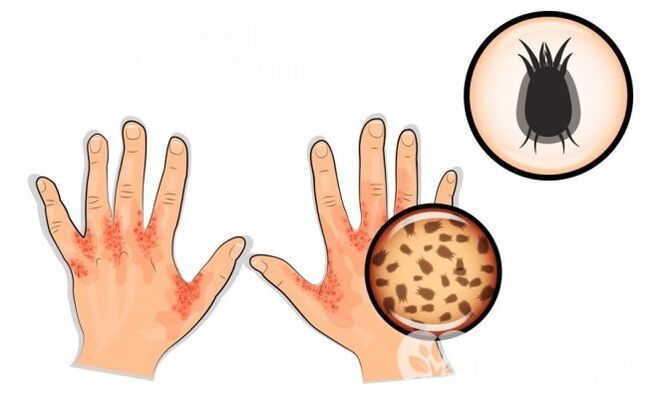
Making an accurate diagnosis is not particularly difficult.However, therapy requires a long period of time.
How to get rid of subcutaneous parasites?
The fight against helminths developing under the skin is based on the use of superficial and medicinal methods, as well as surgical operations.
Surface treatment
Superficial methods of action are used to combat helminths living in the epidermis (for example, scabies and demodicosis).
Special drugs are rubbed into the skin for scabies.These drugs are spread all over the body overnight.The course lasts 2 weeks.People who have been in contact with an infected person are advised to carry out the same procedures.
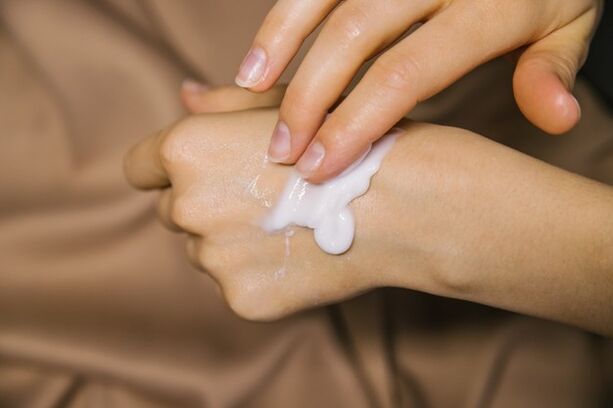
For demodicosis, suspensions, ointments, solutions, gels, scrubs, cryotherapy are used, which reduce the secretion of sebum, deprive the body of nutrition and reduce the negative impact of the parasite.
For other types of helminths, external manifestations are removed with the help of ointments with steroids and antibiotics.
All ointments, specially selected by doctors, relieve inflammation, deprive parasites of motor activity and kill them.
Local procedures should be used in moderation, avoiding damage to the skin, so as not to disturb the acid-base balance and exclude the addition of pathogenic microbes to the pathology.
IMPORTANT!When you start a course of therapy in high temperatures, you need to wash your clothes and warm your pillows in the bright sun.
Medicines
For each type of helminth, a different medicine is used, prescribed by the doctor, depending on the stage of the disease.
Some drugs completely kill parasites, others deprive them of mobility and prevent reproduction.
When a helminth dies, a person may experience signs of intoxication: headache, nausea, vomiting, so drugs are selected carefully.
Major diseases with pathologies of other organs must be treated.Symptomatic therapy is used.
Surgical methods
Surgeon intervention is required to remove the parasite through an incision.
The surgery takes place as usual under local anesthesia.The surgeon must be a virtuoso and a master of his art to remove the helminth completely, without dividing it into parts.
Rehabilitation methods after surgery include therapy with antibacterial, analgesic, anti-inflammatory and antiparasitic drugs.